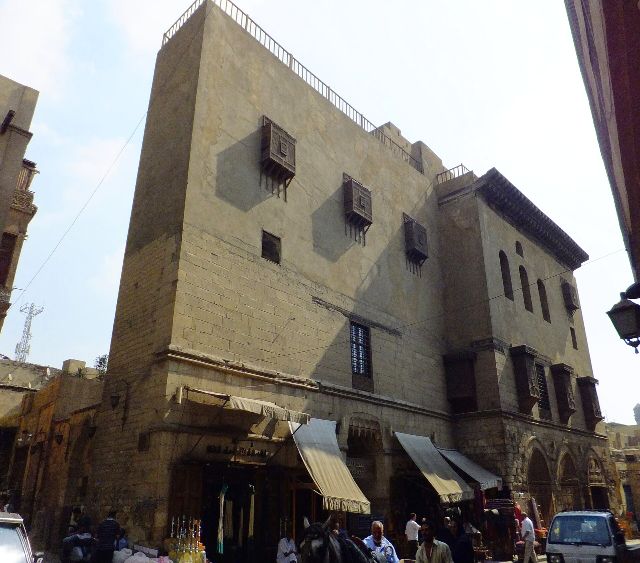



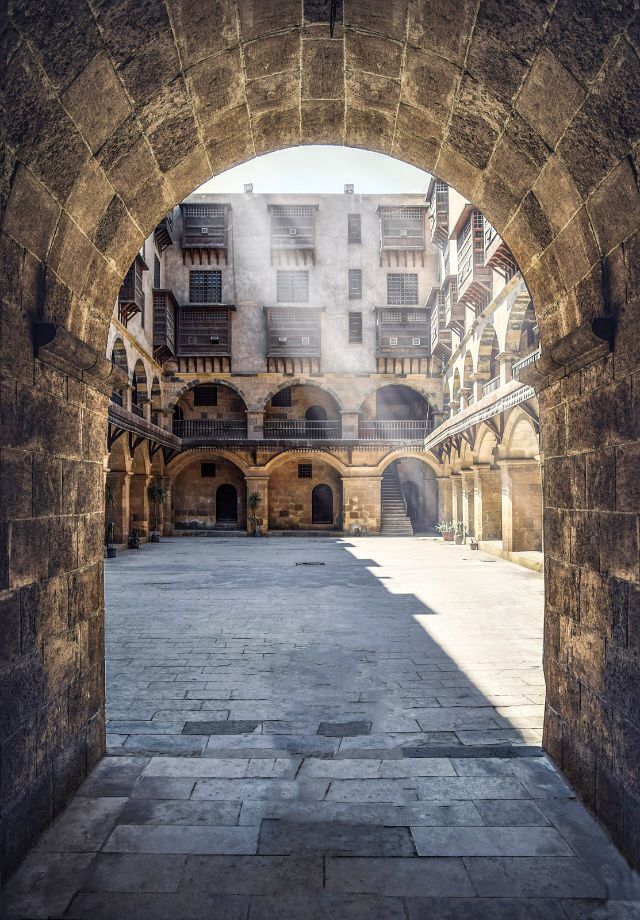
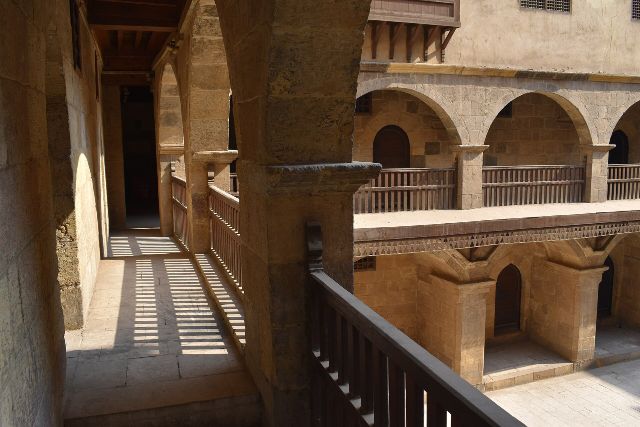
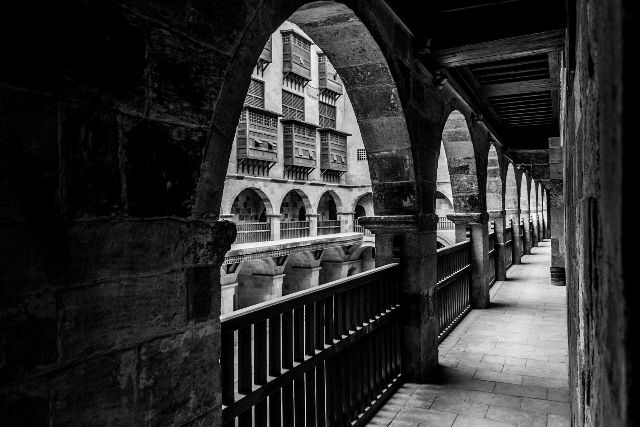
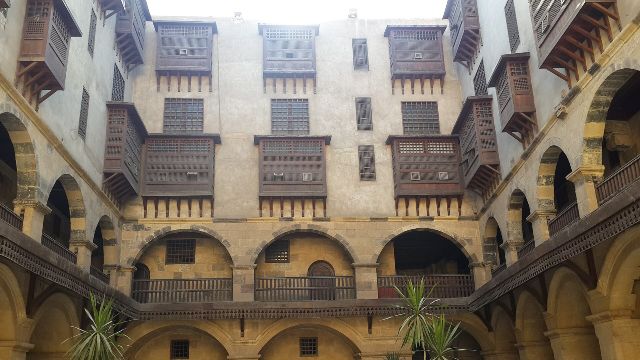
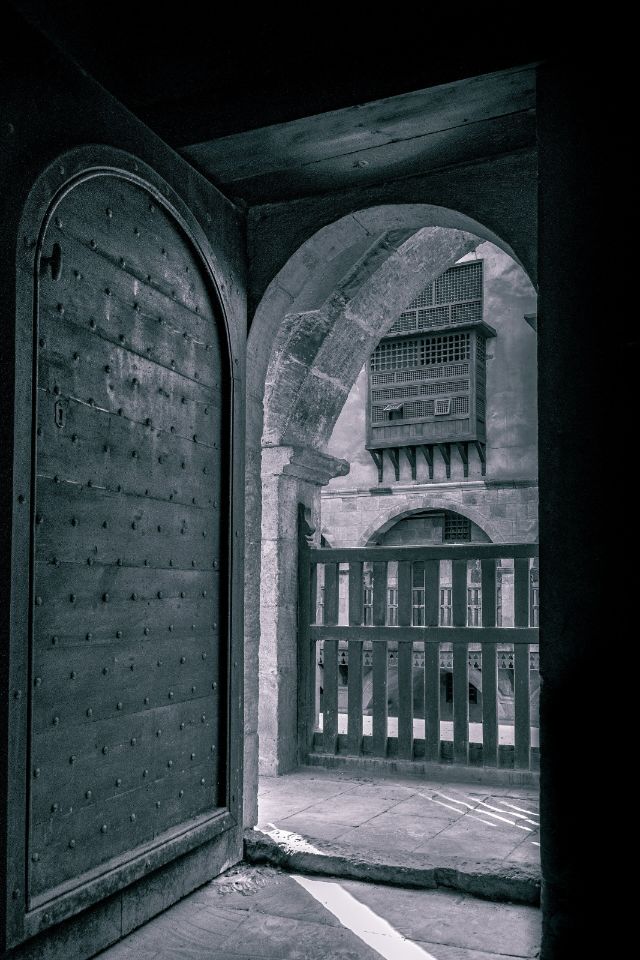
Wikalat Bazaraa in al-Gamaliyya dates to the Ottoman period and was known as Wikalat al-Kikhya before Mohamed Bazaraa bought it in the late nineteenth century. Its later name became associated with trade including Yemeni coffee and Nablus soap, connecting this Cairene building with routes far beyond the neighbourhood.
Commercial and storage spaces occupy the lower levels around a courtyard, with residential units and wooden screens above. The arrangement shows how merchants, goods and accommodation could share one building. Looking from the arches upwards reveals the wikala as an architecture of both work and daily life.