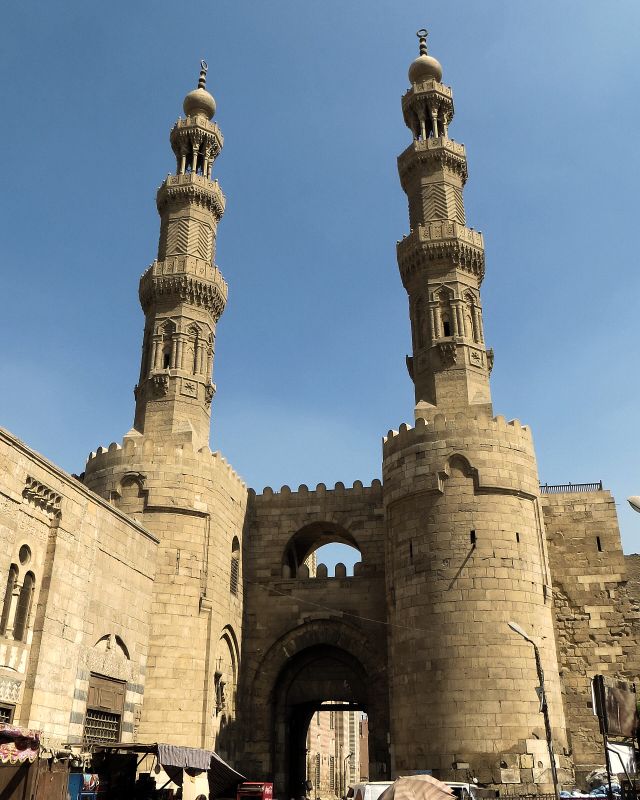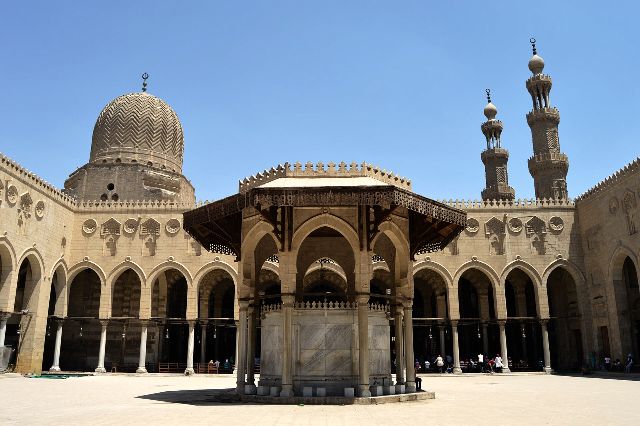



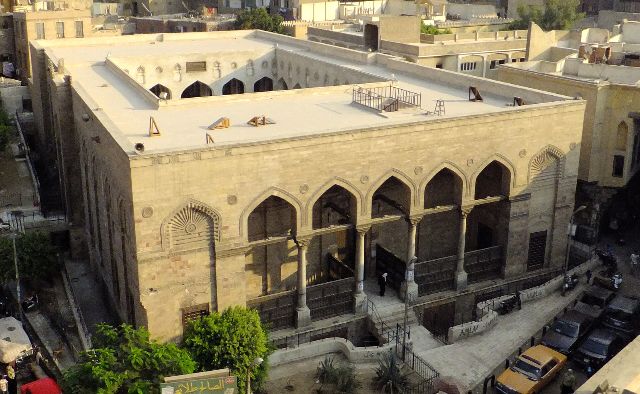
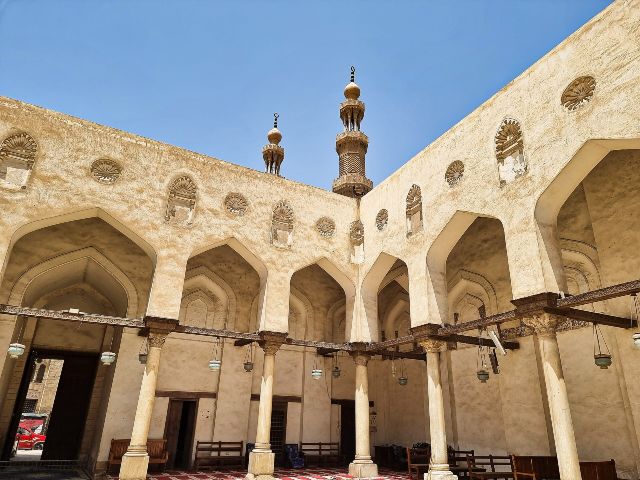
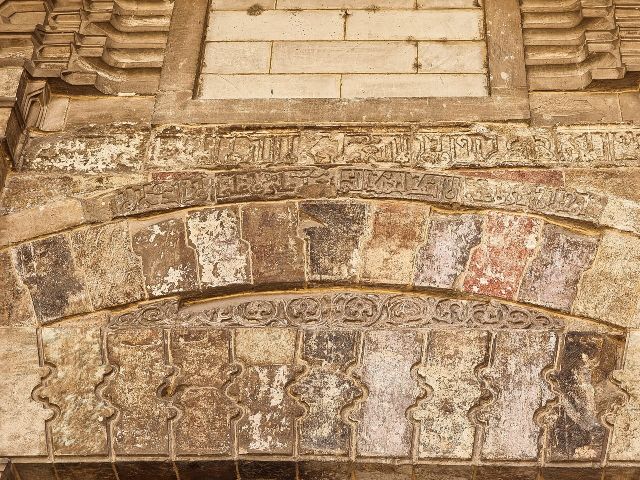
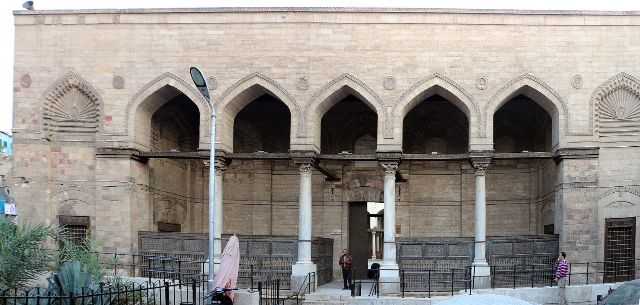
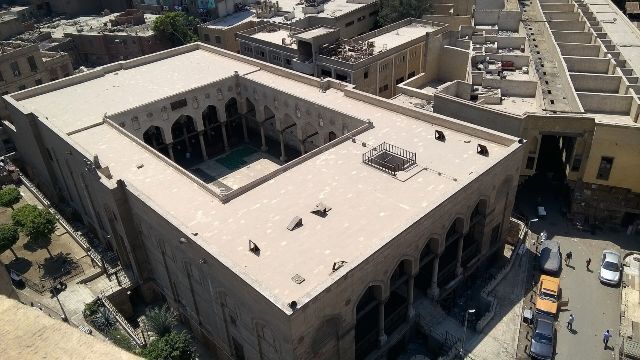
The Fatimid vizier al-Salih Tala’i built his mosque outside Bab Zuweila in 1160, near the end of Fatimid rule in Egypt. It was raised above shops whose income helped support it, tying worship to the surrounding commercial activity and the institution’s continued upkeep.
A columned entrance portico draws attention before the courtyard and arcades reveal details from successive periods, including a minbar added under the Mamluks. The mosque allows two histories to be read together: its Fatimid design and later elements that accompanied continued care and use without erasing the original architectural idea.