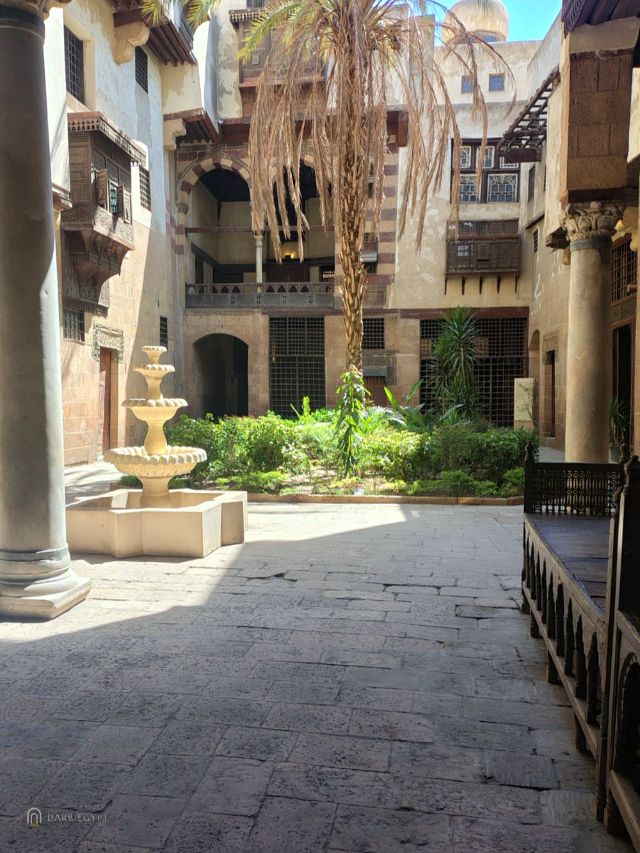
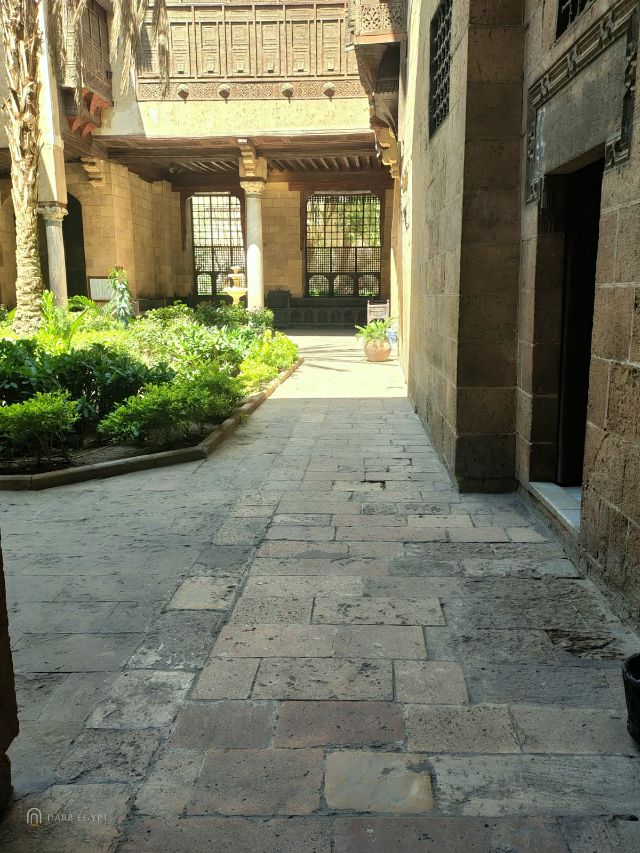
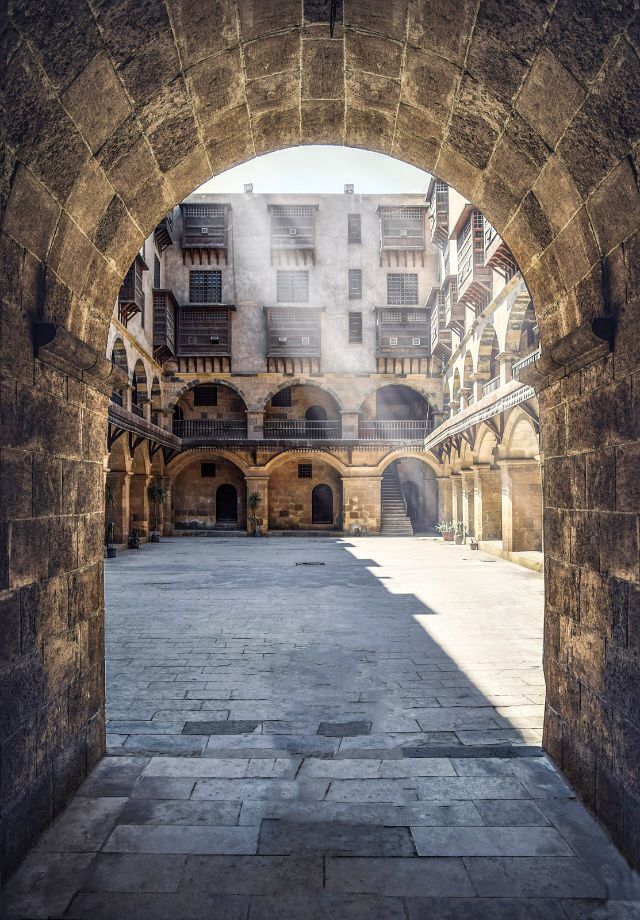
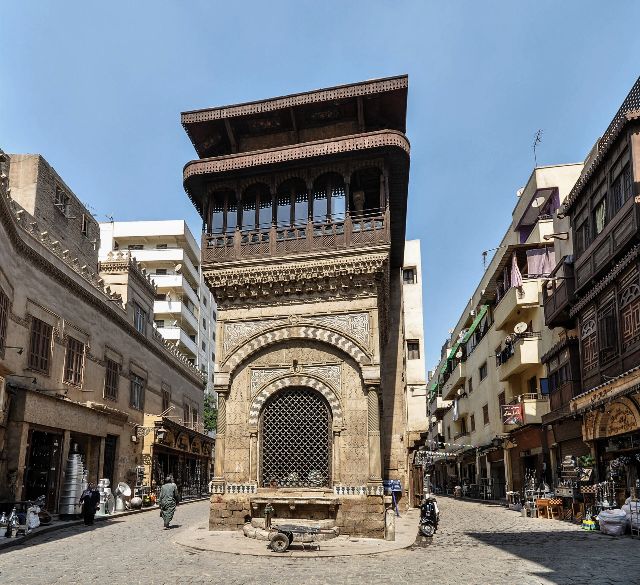
You stand before a quiet, unassuming piece of architecture and feel an inexplicable sense of familiarity with it. Curiosity soon gets the better of you, drawing you past its bent entrance, where a spacious courtyard welcomes you and envelops you in calm and comfort.
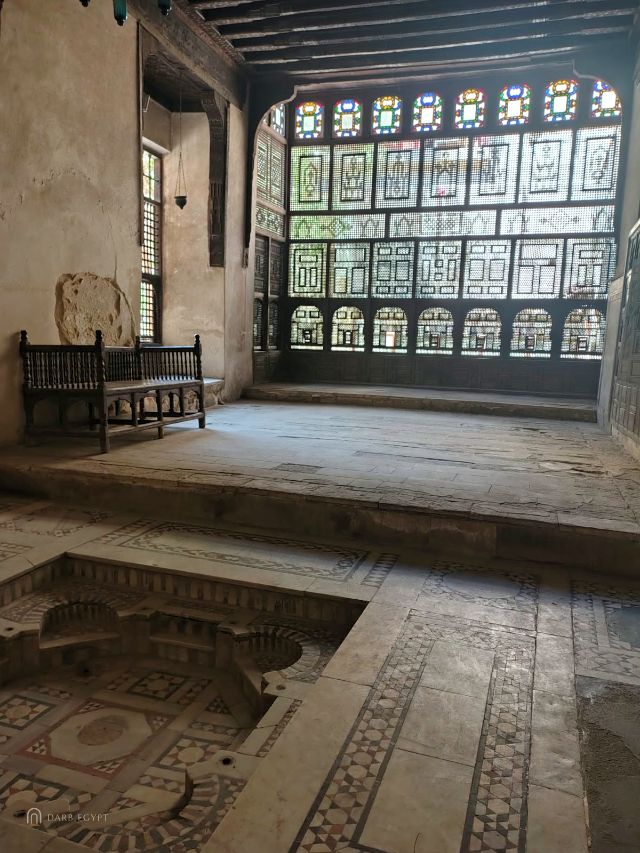
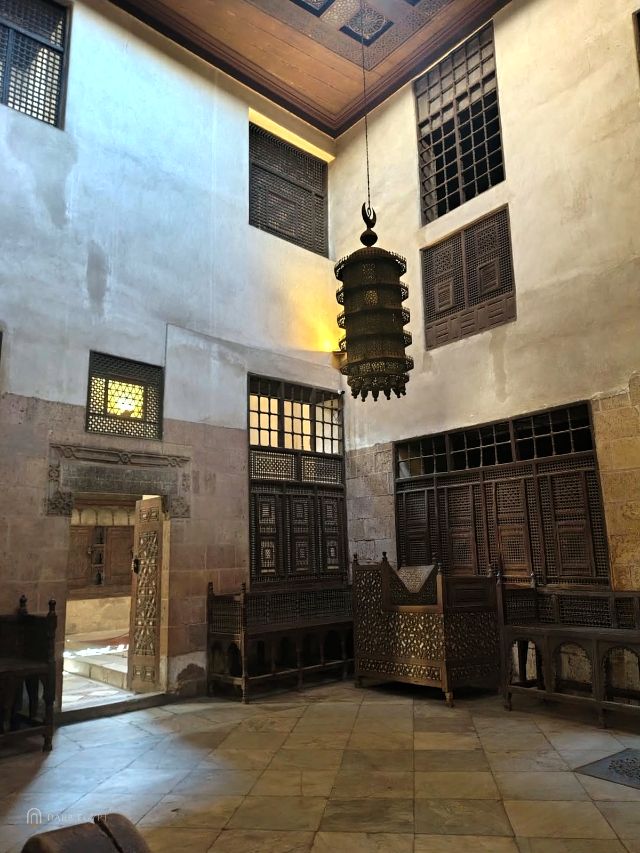
Then, driven by a growing sense of wonder, you begin to wander through its arcades and rooms. You find yourself captivated by the warmth of the light filtering through its timeworn mashrabiyas, and gradually feel the place stripping away the noise of the outside world, inviting you instead into the intimacy of a home that somehow feels as though you know it - and it knows you.
It carries you back hundreds of years, allowing you to experience the beauty and warmth of authentic Egyptian gatherings, in all their rich and intimate detail.
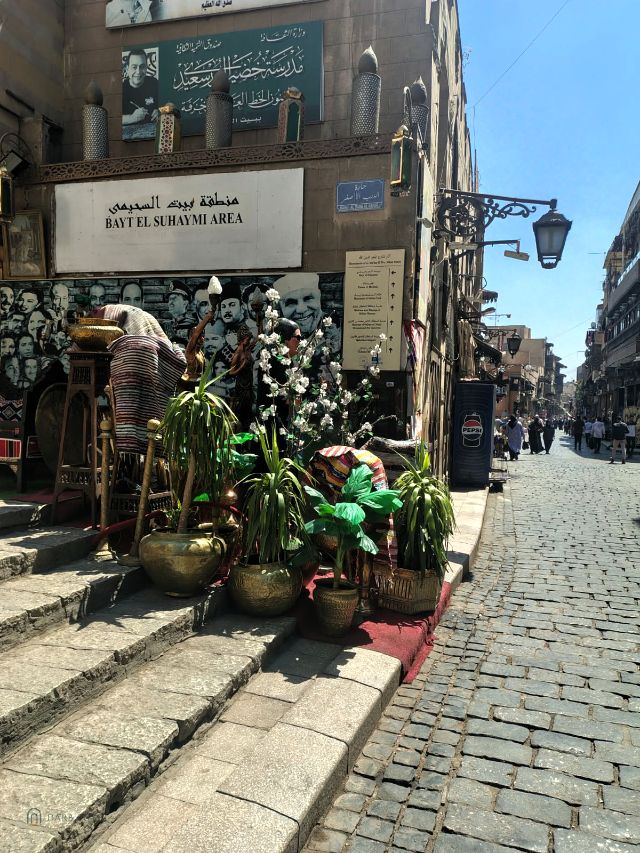
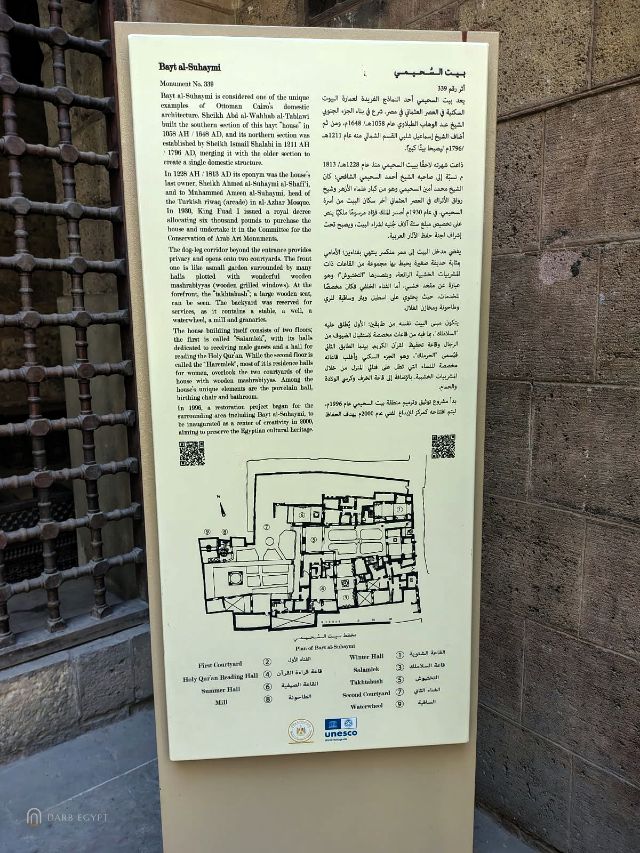
Hidden along al-Darb al-Asfar, just off Al-Muizz Street, Bayt al-Suhaymi reveals far more than its narrow historic-lane setting suggests. Step inside and the house opens around a spacious courtyard, with mashrabiyya windows, reception spaces, halls and domestic rooms arranged around it. The earliest section was built in 1648 by Shaykh Abd al-Wahhab al-Tablawi; another section was added in 1796 by Hajj Ismail Chelebi, and the two were eventually joined into a single residence. The house later took the name of the al-Suhaymi family, whose members included a prominent al-Azhar scholar associated with the Turkish riwaq during the Ottoman period.
What makes the house particularly revealing is that it preserves much more than ceremonial rooms. Its wooden mashrabiyyas, reception areas and garden sit alongside wells, baths, a waterwheel used to irrigate the garden, a grain mill, storage vessels and even a birthing chair—details that allow visitors to understand how a large Cairene household actually functioned. The heirs of the al-Suhaymi family sold the property to the Committee for the Preservation of Arab Antiquities in 1931. Following restoration, it reopened in 2000 as an arts and cultural centre, giving the old residence a new public life while preserving its historic character.
Buy your ticket online before you go; admission is handled online, and the mobile signal around the site can be weak enough to make booking on arrival difficult.
Allow about an hour. The house is larger than it looks from outside, with chairs and spaces where you can stop and sit quietly.
The latest field visit found the site almost empty, with only about four visitors; it can therefore feel unusually calm for the Al-Muizz area, although crowds vary by day.
Do not leave entry until the final hour; the Ministry of Tourism and Antiquities states that last admission is one hour before closing.
Personal photography with a phone or camera is allowed, but avoid flash inside rooms and other enclosed spaces under Ministry photography rules.
Good to know
No drinking water was available inside during the field visit, so bring a bottle with you.
Some rooms were closed during the visit, and the areas open to visitors may change.
The site is not well suited to wheelchairs or strollers; stairs, passages and level changes can make access difficult.
The Al-Muizz area ticket does not include Bayt Al-Suhaymi; the house requires a separate ticket.
Some parts of the site appeared less carefully maintained than expected during the field visit.
Al-Darb al-Asfar Lane, off Al-Muizz Street, Al-Gamaliya, Cairo
Nearest landmark: Darb al-Asfar, off Al-Muizz Street
Nearest metro: Bab El-Shaaria
A taxi or ride-hailing car can get you close to Al-Muizz Street and al-Darb al-Asfar, followed by a short walk. By metro, Bab El Shaaria is the most practical nearby connection, then continue by a short taxi ride or on foot to al-Darb al-Asfar.
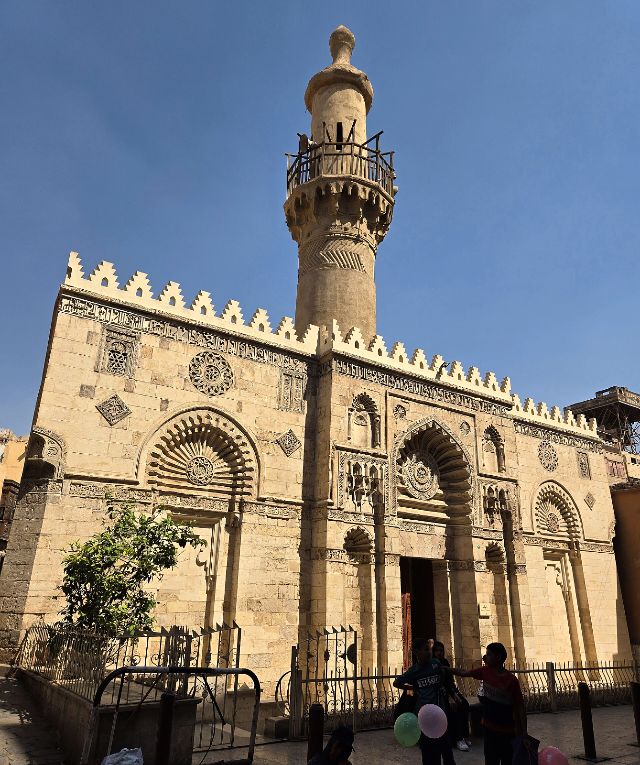
A walk through the heart of Fatimid Cairo, from its northern gate to its southern one: mosques, sabils, houses and markets along a single street. Best from late afternoon into sunset, and special on Ramadan nights.