


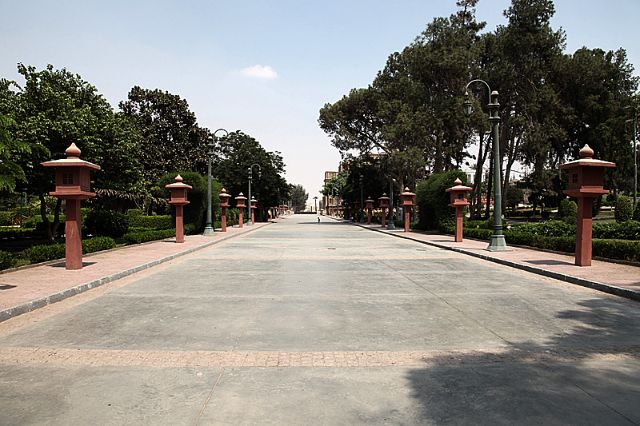
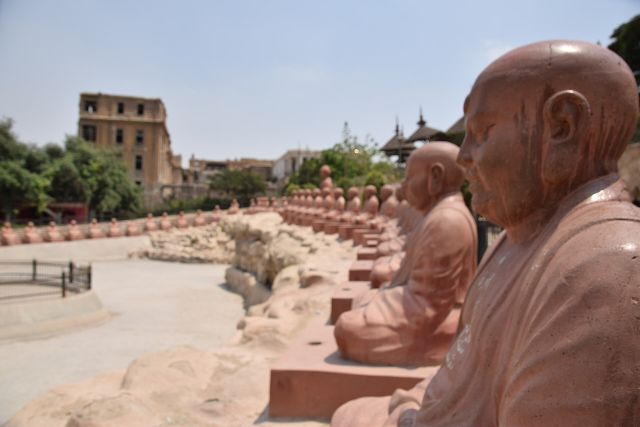
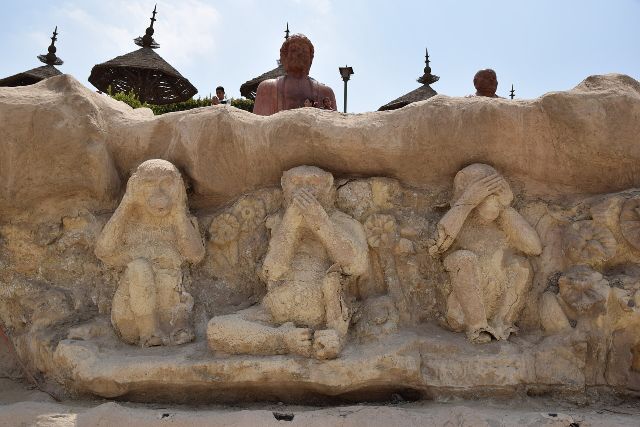
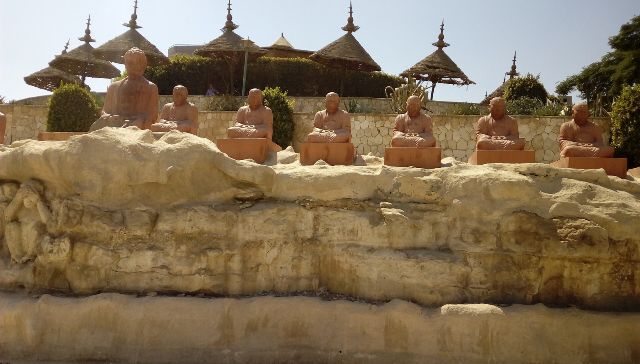
Helwan’s Japanese Garden was completed in 1922 to a design by Mohamed Bey Zulfiqar, drawing on Asian garden and architectural motifs. It belongs to a period when Helwan flourished as a place of residence and recreation, preserving an Egyptian interpretation of a distant cultural landscape.
Statues, paths, pool layouts and pavilions create successive points of interest, including rows of figures associated with Buddhist imagery. Each feature need not be read as a precise representation of Japan. The more revealing experience is to follow how these references were assembled within a historic garden and placed among trees and open spaces.