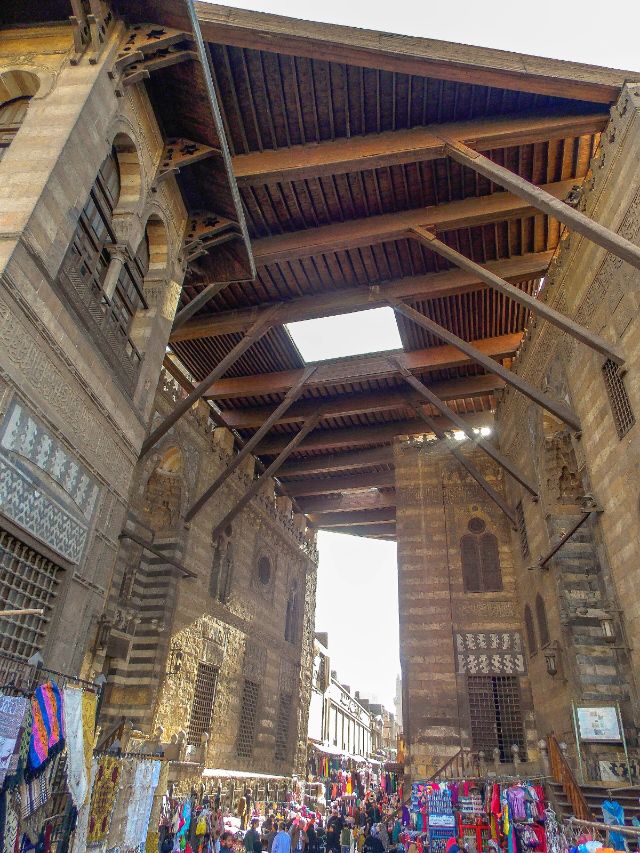
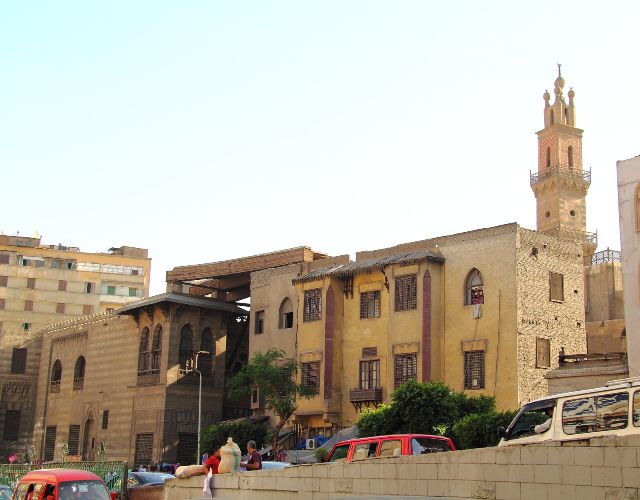
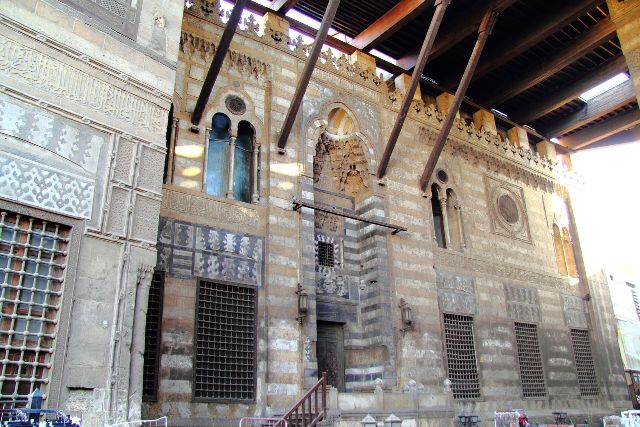
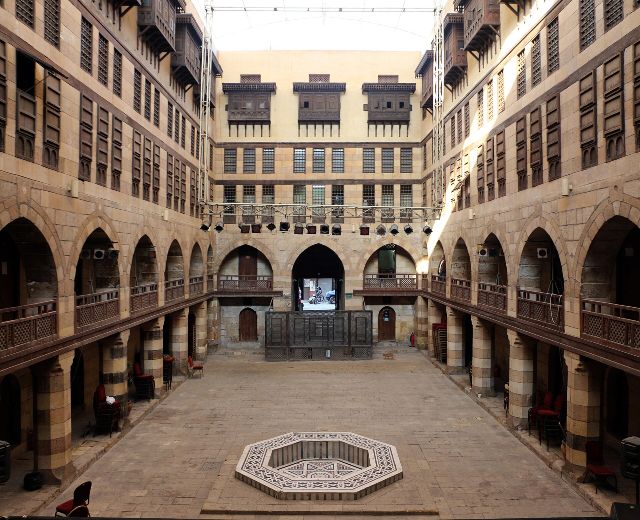
At al-Muizz and al-Ghuriyya, Sultan Qansuh al-Ghuri established his complex in the early sixteenth century, shortly before Mamluk rule ended. Its mosque and madrasa, mausoleum, khanqah, public fountain and school occupied opposite sides of the street, making the road part of their architectural relationship.
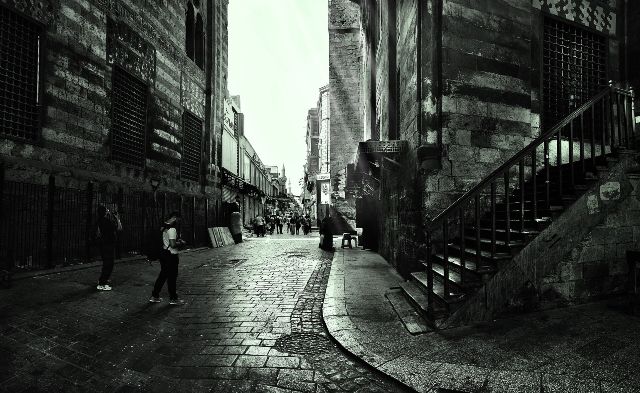
Al-Ghuri died at Marj Dabiq in 1516 and was not buried in the mausoleum prepared for him. The buildings remain within an active commercial district, their tall façades sharing space with trade and everyday movement. Begin by viewing both sides together, then explore whichever interiors are accessible.
The best route depends on your starting point. Navigate to Al-Ghuriya Street, Al-Azhar area, Cairo; for Historic Cairo sites, expect to walk the final part through narrow streets.
A walk through the heart of Fatimid Cairo, from its northern gate to its southern one: mosques, sabils, houses and markets along a single street. Best from late afternoon into sunset, and special on Ramadan nights.