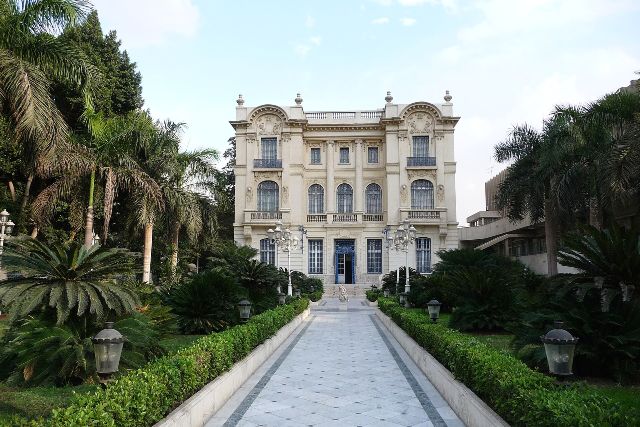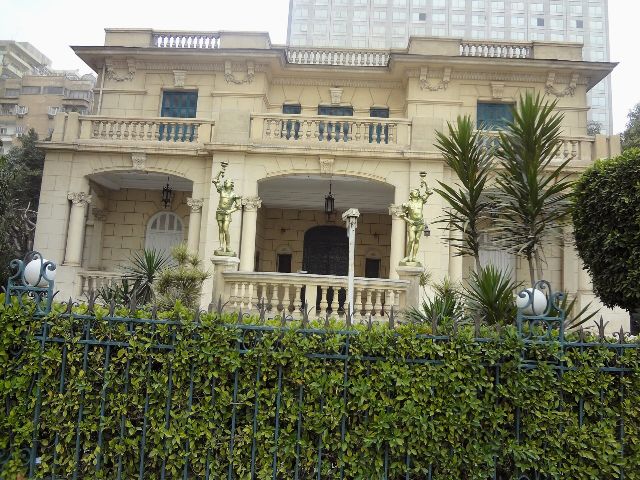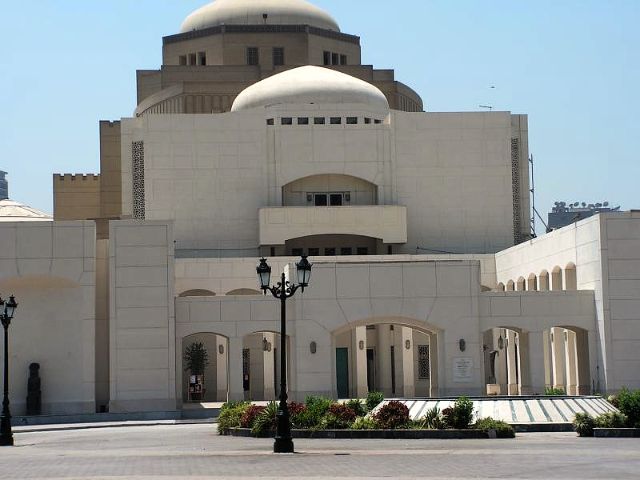



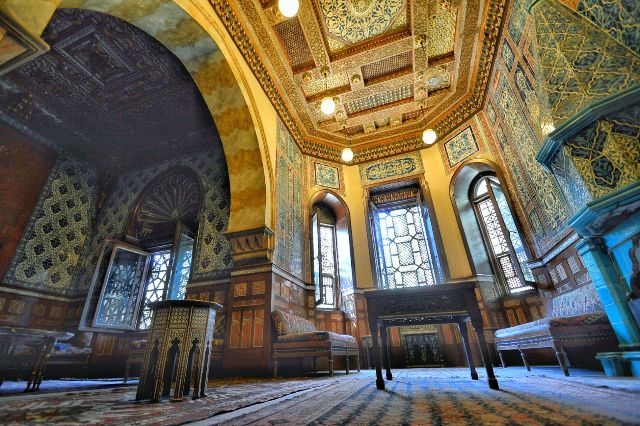
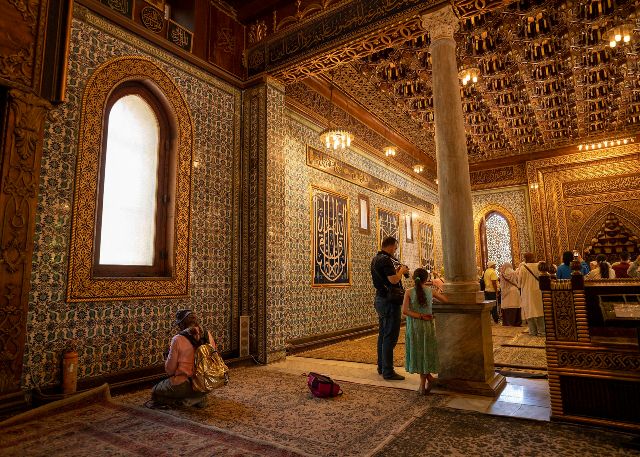
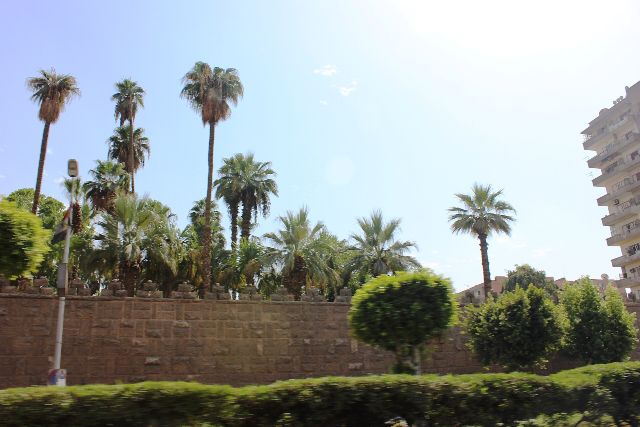
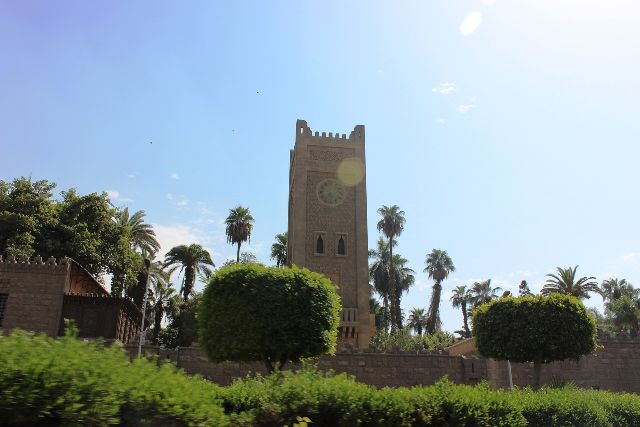
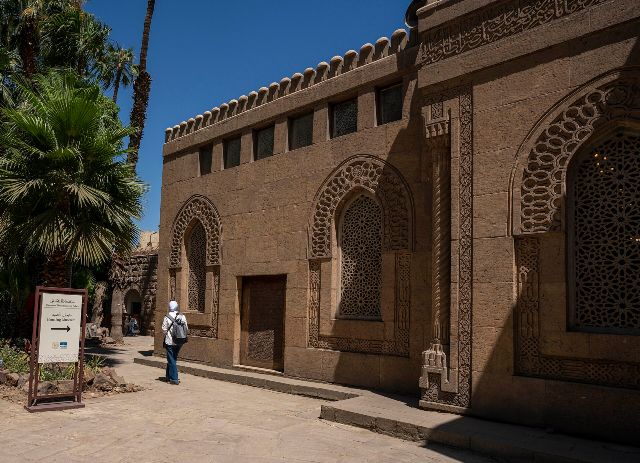
On Rawda Island, Prince Muhammad Ali Tawfik shaped Manial Palace around his own interest in Islamic art and architecture. Developed from the early twentieth century into the late 1920s, its separate buildings served reception, residence and ceremonial functions, alongside a mosque, clock tower, collection museum and extensive garden.
Mamluk, Ottoman, Persian and Andalusian influences appear together rather than forming a single historical style. Moving between the buildings reveals changing uses and characters, with woodwork, tiles, marble and furnishings integrated into each interior. The ensemble also records its owner’s personal taste.