
Placeholder — replace with a photo from the visit
Museum · Modern
Museum of Islamic Art
From a key to the Kaaba to instruments of science — an Islamic world in Cairo
In Bab al-Khalq, Cairo’s Museum of Islamic Art holds one of the world’s major Islamic art collections, using objects to tell stories of science, writing, daily life, religion and craft across centuries and regions.
About this place
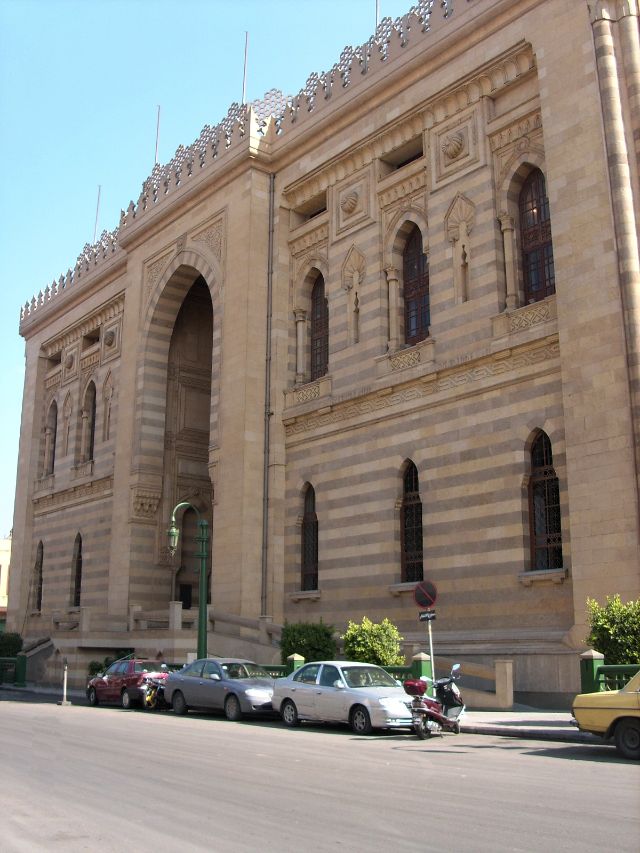
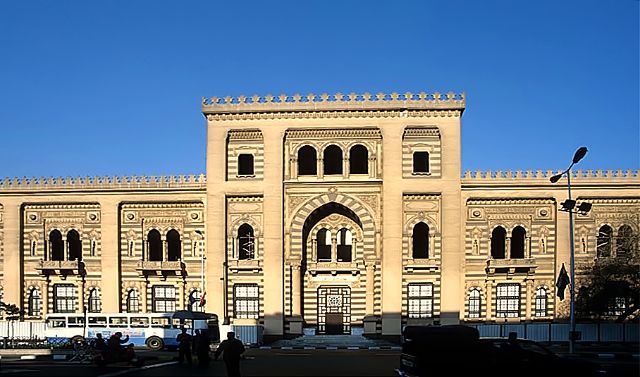
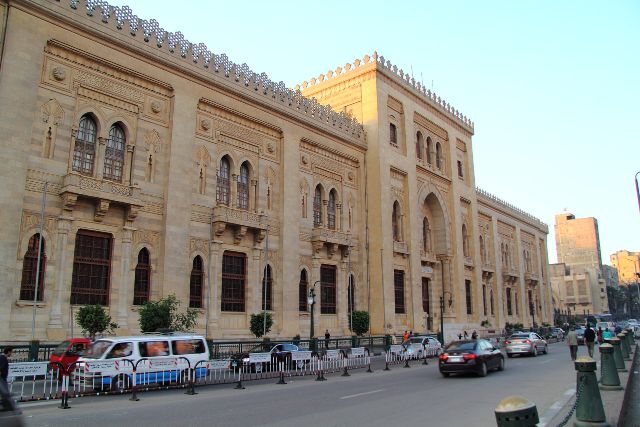
The Museum of Islamic Art opened in its present Bab al-Khalq building in 1903, after the project to collect Islamic objects in Cairo began in 1880. Its façade draws on Mamluk architectural forms, and the museum became one of the world’s major institutions devoted to Islamic art, presenting objects from different regions and periods across the Islamic world.
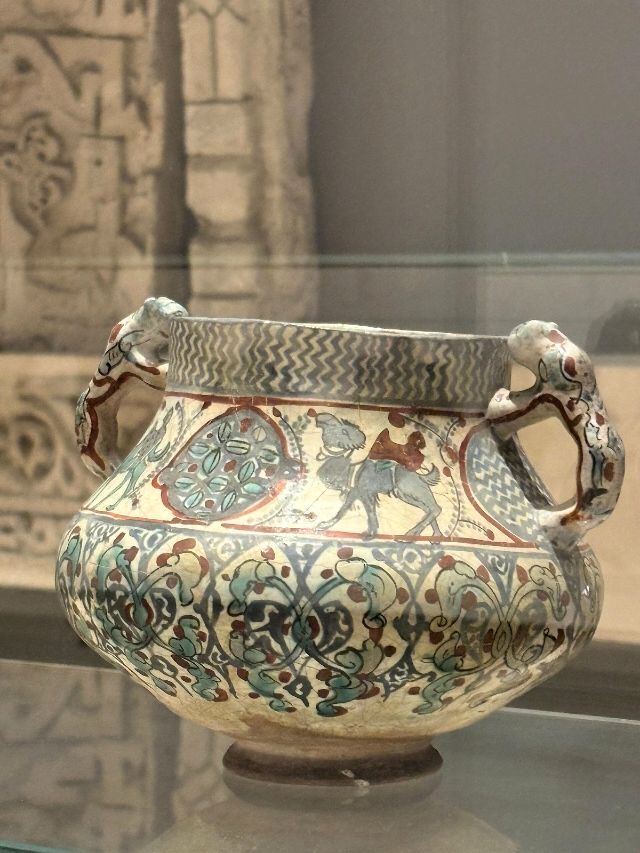
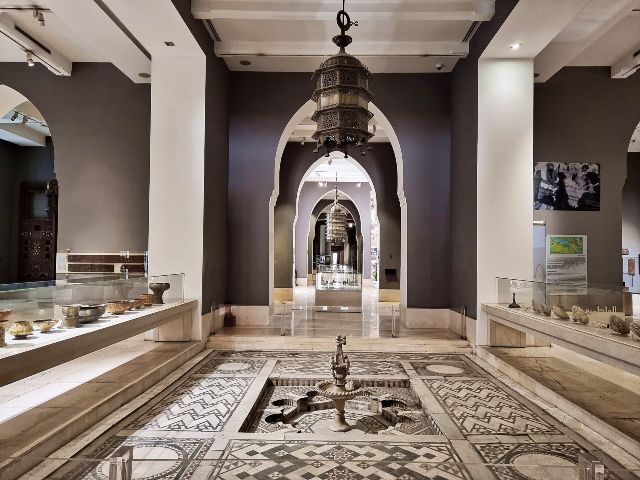
The collections include carved wood, ceramics, glass, metalwork, textiles, manuscripts, carpets, arms and scientific instruments connected with astronomy, medicine and engineering. The museum was badly damaged by a nearby bombing in 2014, then restored and reopened in 2017. A visit therefore combines the history of Islamic art with the story of a major museum dedicated to preserving and interpreting it.
The museum shows Islamic art as more than religious decoration, connecting science, writing, domestic life, trade, warfare, architecture and craft across a vast cultural world.
Visitor information
- Opening hours
- Sunday — 09:00 – 17:00
Monday — 09:00 – 17:00
Tuesday — 09:00 – 17:00
Wednesday — 09:00 – 17:00
Thursday — 09:00 – 17:00
Friday — 09:00 – 17:00
Saturday — 09:00 – 17:00 - Payment
- Card
- Amenities
- Toilets · Parking · Guides
| Tickets | Price | Checked |
|---|---|---|
| Egyptian | 20 | 2026-09-06 |
| Egyptian student | 10 | 2026-09-06 |
| Foreign | 340 | 2026-09-06 |
| Foreign student | 170 | 2026-09-06 |
Highlights
- The Mamluk key to the Kaaba
- Textiles, manuscripts and Kufic inscriptions
- Astronomical/scientific instruments, metalwork and ceramics
Tips from the visit
- Allow around two hours; the collection is broader than the exterior suggests.
- Mohamed Naguib metro is a useful connection.
- Start with the themes that interest you rather than only following a linear route.
Worth knowing
- The ticket office closes at 4:00 PM.
- Large bags and certain items may need to be stored, and flash photography is not permitted.
Location & getting there
Bab al-Khalq Square, Port Said Street, Cairo
Nearest landmark: ميدان باب الخلق
Nearest metro: محمد نجيب
From Mohamed Naguib metro station, head toward Bab al-Khalq Square and Port Said Street; walk or take a short taxi for the final section.
30.0466, 31.2521
Open in Google Maps ↗Nearby

Since opening in 1902, the Tahrir museum has become part of Egyptology’s own history. Although the Tutankhamun collection has moved to the Grand Egyptian Museum, its halls still hold exceptional objects spanning ancient Egyptian history.

In Fustat, the National Museum of Egyptian Civilization tells Egypt’s story as one continuous timeline from prehistory to the modern era, before the Royal Mummies Hall shifts the experience into a quieter encounter.

Within the Roman fortress of Babylon, the Coptic Museum holds one of the world’s richest collections of Coptic art, while the Hanging Church, Abu Serga, Ben Ezra Synagogue and other Old Cairo landmarks sit steps away.